Pondering My Garden (and King Nebuchadnezzar)

The Guara – bobs up and down with the weight of bumblebees

Since gardening season is well underway, I thought I would post an article I had published in “Keys for Living Magazine” last summer. Hope you enjoy it:

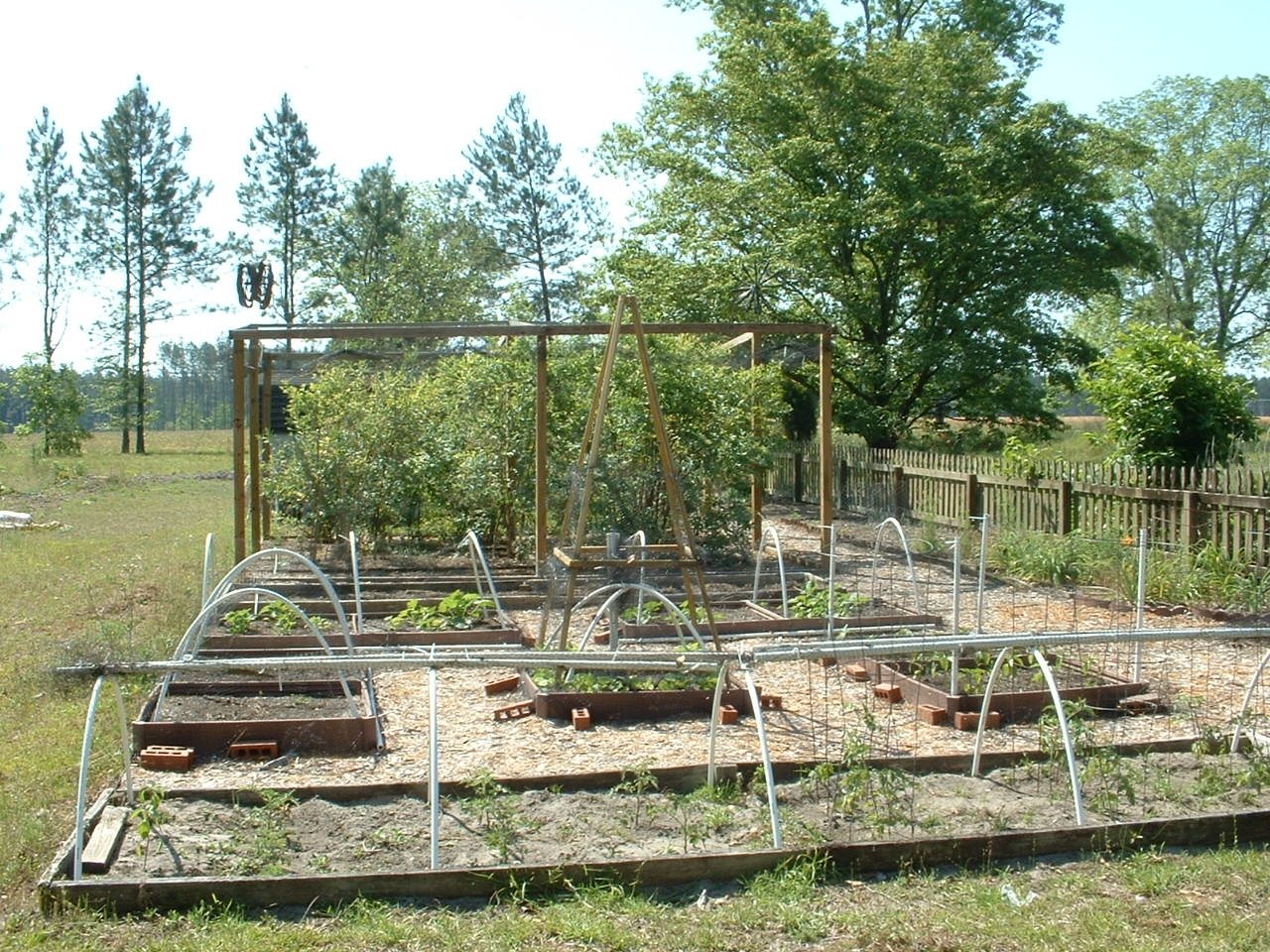
I marveled at our backyard’s beauty. The phlox beamed beside the weathered picket fence. The hibiscus was nearly eight feet tall and was smothered in pink blooms. Long tendrils of the guara held out their flowers and danced as the bumblebees did touch and go landings. Cardinals and bluebirds were bright spots of color at the feeders.

Several years earlier the yard was just an expanse of pasture. Over time I built the garden’s structure and established the flower beds. The fence came first and defined the back of the yard. I think I actually applauded in satisfaction when the gate’s latch clicked in place and fit perfectly.

A working gate deserved more than a dirt path, so a walkway of red concrete pavers came next. The addition of a pump house with a barn style roof and weathervane on top added a rustic touch to the scene.

The bahia grass in the old pasture was so thick that my tiller just dragged me along as it bounced over the top. I’m sure it was comical to watch, but to me it was frustrating. With that obstacle, it became a struggle to transform sections into flower beds. Many exhausting sessions of hand work were required but the transformation did occur.

The histories of many of the plants also came to mind. The oak leaf hydrangea was 12 inches tall when planted. Now it covered an area twenty five feet across.

I bought the pagoda plant sight-unseen. What a surprise we had when it produced spectacular orange blooms over a foot tall that did look like a Chinese pagoda – with multiple stems and flowers in layers that decreased in circumference from the bottom to the top. And they were like butterfly magnets.

Pagoda Plant with Butterflies

Pagoda Plant with Butterflies

Standing there, remembering the years of work that had been involved, I could have shouted “Look at this great garden I have built!” Thankfully, I thought better of it and didn’t.

I thought of King Nebuchadnezzar who gazed at his city and said: “Is not this great Babylon, that I have built for the house of the kingdom by the might of my power, and for the honour of my majesty? (Daniel 4:30 KJV) At that moment God showed him who had the power and majesty. The King spent the next seven years eating grass like an ox.

I didn’t mimic his words. Not from fear of having to eat grass, but from the realization that without God I could have done nothing. I praised Him for the beautiful flowers and birds He created. I thanked Him for the strength to build the fence. I thanked Him for the time, resources and opportunities He had provided.

That day I knew what the Apostle Paul meant when he wrote that he had planted and Apollos had watered but God gave the increase (1 Corinthians 3:6). Paul was writing of spiritual growth, but in my physical garden I understood that while I may have built and planted and watered, it was God alone Who, in His power and majesty, had completed it and made it beautiful!

Much Ado About Half of Nothing

Typebars in a 1920s typewriter

Typebars in a 1920s typewriter (Photo credit: Wikipedia)

I don’t know when it happened, but somewhere along the way we lost one of the spaces after a sentence. Back in high-school typing class (yes, it was many years ago), the teacher drilled into our heads that there should be two spaces after a typed sentence. “…type, type, type, type, type, period, space, space!”

However, now I have learned that only one space is needed. As I understand, it comes with the difference between using computers/printers and typewriters. The modern combination can separate the letters depending on their width, while the outdated typewriter takes up the same width with each letter. Thus, with the typewriter, to ensure a readable width at the ends and beginnings of sentences, two spaces were necessary.

Since a space is actually nothing, we can say that now we only need half as much nothing as we did before. I’m not sure if that’s good or bad.

We often hear, and say, there’s nothing to watch on TV. Having half as much nothing to watch doesn’t solve any problems. “Nothing” is the common answer to the question “Whatcha doing?” Doing half as much nothing doesn’t seem to matter one way or the other.

Perhaps Shakespeare’s play will need to be renamed “Much Ado About Half of Nothing”. And, if we’re able to do a task quickly, it may be done in “half of nothing flat”.

You get the idea – losing a space doesn’t have much serious effect. It just requires some practice to get in the habit.

But, when considering “nothing” we are given some principles to follow:

Be anxious for nothing, but in everything by prayer and supplication, with thanksgiving, let your requests be made known to God; and the peace of God, which surpasses all understanding, will guard your hearts and minds through Christ Jesus. Philippians 4:6-7 NKJV

Nothing should interrupt the peace of God within us. In everything that happens in life, which will include trials and tribulations, Christ Jesus is with us, and we should be ever thankful for His presence and power.

 For we brought nothing into this world, and it is certain we can carry nothing out. 1 Timothy 6:7 NKJV

We are not here to gather things for the sake of gathering things. (This is part of the passage including “the love of money is the root of all evil”.) Our pursuits should not be for things but, as verse 8 tells us, if we have food and clothing we should be content. Then, verse 11 spells out that our pursuits should be righteousness, godliness, faith, love, patience, gentleness.

We can pursue no thing, and we can be anxious about nothing (or half of nothing), and find the peace of God – but it’s only through His presence and power that we ever find that contentment that the human mind can’t understand.

Green Acres – Where God’s Nurturing Comes to Fruition


“Green Acres is the place to be. Farm living is the life for me!”

Everyone reading this may not remember the 1960’s TV show “Green Acres”, and it’s possible some others wish they didn’t remember it. (It’s still in re-runs over forty years later). It was a corny comedy about a New York lawyer and his wife who moved to a run-down farm. Oliver Wendell Douglas’ dream was to be a farmer. He wanted to do something productive with his hands and hard work.

The comedy came from Mr. Douglas’ trials and tribulations as he pursued that dream. At times, when others questioned why he didn’t give up, he launched into a speech about what it all means as “you plant the seeds in the ground, wait with anticipation, watch the plants shooting up to the sky (or “shoosting” as his Hungarian wife, Lisa, said), and water and care for them until you enjoy the harvest of your labor.” Oliver just wanted to nurture something and have it come to fruition.

I admit to having had varying levels of “Green Acres Syndrome” through much of my life (wanting to be a farmer, while not knowing much about it). At this point, though, I do know enough to realize it’s hard work, that sometimes pays and sometimes doesn’t. I’m thankful for my regular salary, having a small tractor to bush-hog our old pasture every now and then, and having a few raised beds in the garden to raise a “crop” or two.

While the “Mr. Douglas” plans have waned, I can say the basics of the syndrome remain. It’s still a thrill to go through the process of planting, waiting, watching, watering and feeding, and then enjoying your harvest. I’m thankful my wife, Sharon, still gets a kick out of seeing her nearly 60 year-old husband coming toward the house like a little kid to show her my handful of tomatoes or carrots. What a blessing as the nurturing comes to fruition!

I guess the purpose of nurturing anything is to have a positive effect – to help it mature. The Apostle Peter wrote of the process of nurturing our faith: 

“For this very reason, make every effort to supplement your faith with virtue, and virtue with knowledge, and knowledge with self-control, and self-control with steadfastness, and steadfastness with godliness, and godliness with brotherly affection, and brotherly affection with love. For if these qualities are yours and are increasing, they keep you from being ineffective or unfruitful in the knowledge of our Lord Jesus Christ.” 2 Peter 1:5-8 ESV

The verses before these explain that while we work on this process, it’s God Who gives us His power and His promises that enable us. God is nurturing us through it. As our faith grows and blossoms (through His help) it matures into that greatest of all things – love. And we know that God gets a kick out of seeing His children show Him the fruits of their work – as we love Him and love one another. What a blessing when God’s nurturing comes to fruition!     

His (God’s) delight is not in the strength of the horse, nor his pleasure in the legs of a man, but the LORD takes pleasure in those who fear him, in those who hope in his steadfast love. Psalms 147:10-11 ESV

As Charlene Darling Said, Songs Can Make Us Cry

English: it is picture of the sheet of the son...

Image via Wikipedia

Many years ago, I attempted song writing. None was worthy of publishing and most have mercifully faded from memory. However, there are two I remember (at least the titles). One was a soulful ballad about commitment, titled: “If I Don’t Leave, Then I Guess I’ll Stay”. The other was a heart-tugging song about unrequited love: “I Did a Belly-Buster in the Swimming Pool of Love”. (Charlene Darling of the old “Andy Griffith Show” would have certainly lamented “Don’t play that one, Pa, it always makes me cry!”)

Several years after those, when our son, Daniel, was still a baby, I made this one up to sing as I tried to get him to sleep (sung to any baby melody you choose):

“All the little gophers in gopher town, they all get together when the sun goes down.

They build a little fire, and dance round and round, all the little gophers in go..pher..town!”

Still probably not worthy of publishing, but I was pleased with the imagery, and Daniel seemed to enjoy it.

It’s difficult to write a good song, especially considering you need to have lyrics and an appropriate melody to go with them. It seems impossible to write a great one. That is one of the reasons so many hymns, old and new, are amazing. The words touch our hearts with their praise for our great and gracious God, pictures of unshakeable faith, and prayers for God’s continuing help. Their accompanying music, whether soaring and broad or simple and quiet, fits perfectly to complement the message.

The background of some of these songs makes them even more amazing: From the well known story of H. G. Spafford writing “It Is Well” on an ocean liner after it passed the spot where his four daughters had recently drowned, to the lesser known circumstances behind Thomas A. Dorsey writing “Precious Lord” after hearing his wife had died in childbirth and the baby had not survived, or “Tis so Sweet to Trust in Jesus” being written by Louisa Stead after her husband drowned trying to save a young boy.

These stories reveal the unshakeable faith of the composers. However, above that, especially when considered with the lyrics of the songs themselves, they reveal the love, mercy, and grace of our God.

All the little gophers in gopher town don’t really get together and dance around the fire after sundown (at least I don’t think they do). But, the Lord’s love, mercy and grace is real. It’s shown clearly when we hear that whether we’re in peace like a river, or in sorrows like a stormy sea, God makes us able to say: “It is well with my soul”; or, we cry out to the Lord to take our hand because we’re tired, weary and worn; or we affirm that it truly is sweet to trust in Jesus and know He is with us to the end. And, when God takes the song and reinforces that reality in our heart at just the right moment and for just the right reason, it can make us cry.