Much Ado About Half of Nothing

Typebars in a 1920s typewriter

Typebars in a 1920s typewriter (Photo credit: Wikipedia)

I don’t know when it happened, but somewhere along the way we lost one of the spaces after a sentence. Back in high-school typing class (yes, it was many years ago), the teacher drilled into our heads that there should be two spaces after a typed sentence. “…type, type, type, type, type, period, space, space!”

However, now I have learned that only one space is needed. As I understand, it comes with the difference between using computers/printers and typewriters. The modern combination can separate the letters depending on their width, while the outdated typewriter takes up the same width with each letter. Thus, with the typewriter, to ensure a readable width at the ends and beginnings of sentences, two spaces were necessary.

Since a space is actually nothing, we can say that now we only need half as much nothing as we did before. I’m not sure if that’s good or bad.

We often hear, and say, there’s nothing to watch on TV. Having half as much nothing to watch doesn’t solve any problems. “Nothing” is the common answer to the question “Whatcha doing?” Doing half as much nothing doesn’t seem to matter one way or the other.

Perhaps Shakespeare’s play will need to be renamed “Much Ado About Half of Nothing”. And, if we’re able to do a task quickly, it may be done in “half of nothing flat”.

You get the idea – losing a space doesn’t have much serious effect. It just requires some practice to get in the habit.

But, when considering “nothing” we are given some principles to follow:

Be anxious for nothing, but in everything by prayer and supplication, with thanksgiving, let your requests be made known to God; and the peace of God, which surpasses all understanding, will guard your hearts and minds through Christ Jesus. Philippians 4:6-7 NKJV

Nothing should interrupt the peace of God within us. In everything that happens in life, which will include trials and tribulations, Christ Jesus is with us, and we should be ever thankful for His presence and power.

 For we brought nothing into this world, and it is certain we can carry nothing out. 1 Timothy 6:7 NKJV

We are not here to gather things for the sake of gathering things. (This is part of the passage including “the love of money is the root of all evil”.) Our pursuits should not be for things but, as verse 8 tells us, if we have food and clothing we should be content. Then, verse 11 spells out that our pursuits should be righteousness, godliness, faith, love, patience, gentleness.

We can pursue no thing, and we can be anxious about nothing (or half of nothing), and find the peace of God – but it’s only through His presence and power that we ever find that contentment that the human mind can’t understand.

Helping “Young” Christians

U.S. Army Corps of Engineers (USACE) logo

U.S. Army Corps of Engineers (USACE) logo (Photo credit: Wikipedia)

Speed dating

  I tried a form of speed dating in Atlanta a few weeks ago (please keep reading, it’s not exactly what you think). I checked the “available” list and filled out my “matchmaking” schedule ahead of time as required. The room was filled with 40 or 50 tables. Each session gave 15 minutes at a table – time to present your good qualities and hear about the other’s activities and plans – then move on to another table.

            My first date was with the Corps of Engineers’ Mobile District (What? Surely, you didn’t think I was really speed dating!). We made introductions and a few seconds of small talk, then, jumped right in to the “date”. As the two representatives read our consulting engineering company’s capabilities statement, they quickly moved into the “it’s not you, but it’s me” speech – “sorry, we don’t purchase engineering services – they come through so and so.” But, they did regret the situation, and they committed to passing the information along to “so and so”. I thanked them for their time and help, and we pleasantly parted company.  

            The rest of the sessions throughout the day were a mixture of results. Some echoed the first one, some were moderately promising, and a few stood out as a good match worth pursuing.

The matchmaking sessions were part of a Small Business conference sponsored by the US Army Corps of Engineers. The Corps, other government agencies like Homeland Security, and large (read that huge) prime contractors were looking for small businesses to help them out. The small businesses, like us, were looking for work.

Our company, and especially me, are newcomers to this government contracting – so far, not really sure we want to get heavily involved. There are so many buzz words and acronyms it sounds like gibberish at times. Finding the right person or people to talk with for help isn’t an obvious process.

Surprisingly, the fifteen minute sessions were helpful. At each one, I learned more. The people on the other side of the table were knowledgeable and wanted to help. They simplified terms, asked and answered questions for clarification, and took me a little farther on the journey toward understanding.

If we’re “experienced” Christians we should keep those thoughts in mind. We can ramble off into buzzwords (Christianese as it’s sometimes called) and provide confusion instead of help to those coming along behind us. Instead, we need to make sure they know we’re willing and able to assist them, and take time (even fifteen minutes is good) and ask and answer questions for clarification. Our responsibility is to use those fifteen minutes, not for speed dating, but to take them a little farther on the journey toward understanding.

And we urge you, brothers, admonish the idle, encourage the fainthearted, help the weak, be patient with them all. 1 Thessalonians 5:14 ESV

Those Crafty Cardinals

Cardinal nest with eggs

Cardinal nest with eggs

I’ve never thought of cardinals as crafty and clever birds, but when it comes to something good to eat, I found they will go to great lengths to get it.

Several years ago I planted six blueberry bushes in the backyard. The next year they were large enough to bear fruit, so I kept checking them during the spring days. I was excited during the weeks as the berries turned from green to purple. Finally, one Saturday, I declared that the next weekend would be blueberry picking time. The bushes were still small and there weren’t a lot of berries, but I still looked forward to having some from our own bushes.

I didn’t have time during the week to check them, but, on Saturday morning, I went out in high anticipation with my bowl ready. My jaw dropped and my heart sank when I found the bushes empty. During that week, the birds, (mostly cardinals around our house) had helped themselves and cleaned them out.

The next year and several years after that I put up PVC pipe to make a frame and put netting over the bushes. I used twist ties to put the sections of netting together and attach it to the frame. That would work for a while, but after a week or two I would look out the back door and see a bird in the bushes, about to kill itself trying to get out the netting. I’d open up the entrance way and shoo him out. As the season went on and the birds seemed to get smarter, I would have to let a bird out 2 or 3 times a day.

            Each time I would look around for holes in the netting. Sometimes the pvc had shifted or leaned and left a gap. Sometimes the pins holding the netting to the ground had come loose. I did watch to see how the birds got in. One day I saw one jump off the pvc onto the top netting. The bird’s weight caused a seam to open between two sections and he hopped through it.

Last year, I built a sturdy frame of 4X4’s and 2X4’s to hold the netting, including a 2X4 runner at ground level. I stapled the netting to the wood, and used squeeze-on clips to connect the pieces of netting. That kept them out until the last week or two of harvest season, when I noticed a couple of rabbits inside the netting and found that they had chewed holes in it. The birds followed them through those, but also figured out if they flapped hard enough on the netting in some places they could work their way between two overlapped pieces and get in.

When I built the frame and installed the netting, I set it up to be able to roll the netting up and secure it with cable ties to uncover the bushes (for easier access for me and the bees). After last season, I did that, and the netting has been rolled up since then. (you can see a picture on last week’s blog)

The flowers came and the berries began filling out on the bushes – hopefully for a good crop for this year. So, last Saturday, I decided it was time to lower the netting, staple it to the runner, and put a strip of chicken wire at the bottom to keep the rabbits from chewing holes.

As I neared the bushes, a cardinal flew out. I looked to make sure there weren’t any others there, and let out an “oh, no!” at what I saw. I moved closer and thought “maybe not, maybe not”. But, then I stood on tippy-toe and peered into the nest I had found. There were three cardinal eggs in the nest.

As I said, “crafty and clever” describes a cardinal. This one went so far as to build a nest and lay eggs, knowing that I couldn’t lower the netting and separate them (and the blueberries) from the mother bird. What a devious plan – but, maybe the little ones will hatch and be out of the nest before the berries are completely ripe. We shall see.

And ye shall seek me, and find me, when ye shall search for me with all your heart.” Jeremiah 29:13.

We can learn from the cardinals’ diligence (without the need for any craftiness or cleverness) in finding what they were seeking. As the verse says, if we search for God with all our heart, we will find him. He has always been there and always will be.

Green Acres – Where God’s Nurturing Comes to Fruition


“Green Acres is the place to be. Farm living is the life for me!”

Everyone reading this may not remember the 1960’s TV show “Green Acres”, and it’s possible some others wish they didn’t remember it. (It’s still in re-runs over forty years later). It was a corny comedy about a New York lawyer and his wife who moved to a run-down farm. Oliver Wendell Douglas’ dream was to be a farmer. He wanted to do something productive with his hands and hard work.

The comedy came from Mr. Douglas’ trials and tribulations as he pursued that dream. At times, when others questioned why he didn’t give up, he launched into a speech about what it all means as “you plant the seeds in the ground, wait with anticipation, watch the plants shooting up to the sky (or “shoosting” as his Hungarian wife, Lisa, said), and water and care for them until you enjoy the harvest of your labor.” Oliver just wanted to nurture something and have it come to fruition.

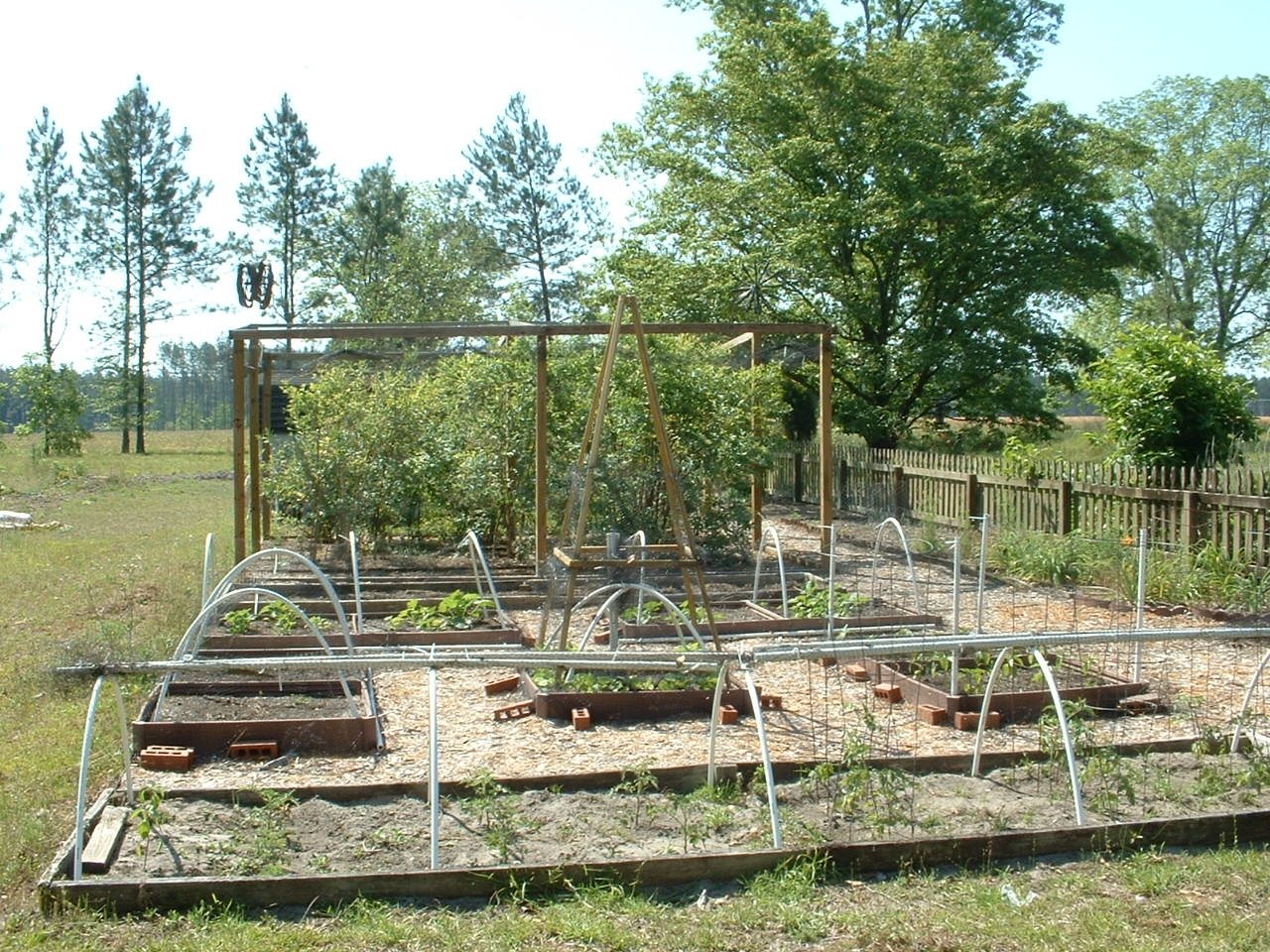
I admit to having had varying levels of “Green Acres Syndrome” through much of my life (wanting to be a farmer, while not knowing much about it). At this point, though, I do know enough to realize it’s hard work, that sometimes pays and sometimes doesn’t. I’m thankful for my regular salary, having a small tractor to bush-hog our old pasture every now and then, and having a few raised beds in the garden to raise a “crop” or two.

While the “Mr. Douglas” plans have waned, I can say the basics of the syndrome remain. It’s still a thrill to go through the process of planting, waiting, watching, watering and feeding, and then enjoying your harvest. I’m thankful my wife, Sharon, still gets a kick out of seeing her nearly 60 year-old husband coming toward the house like a little kid to show her my handful of tomatoes or carrots. What a blessing as the nurturing comes to fruition!

I guess the purpose of nurturing anything is to have a positive effect – to help it mature. The Apostle Peter wrote of the process of nurturing our faith: 

“For this very reason, make every effort to supplement your faith with virtue, and virtue with knowledge, and knowledge with self-control, and self-control with steadfastness, and steadfastness with godliness, and godliness with brotherly affection, and brotherly affection with love. For if these qualities are yours and are increasing, they keep you from being ineffective or unfruitful in the knowledge of our Lord Jesus Christ.” 2 Peter 1:5-8 ESV

The verses before these explain that while we work on this process, it’s God Who gives us His power and His promises that enable us. God is nurturing us through it. As our faith grows and blossoms (through His help) it matures into that greatest of all things – love. And we know that God gets a kick out of seeing His children show Him the fruits of their work – as we love Him and love one another. What a blessing when God’s nurturing comes to fruition!     

His (God’s) delight is not in the strength of the horse, nor his pleasure in the legs of a man, but the LORD takes pleasure in those who fear him, in those who hope in his steadfast love. Psalms 147:10-11 ESV