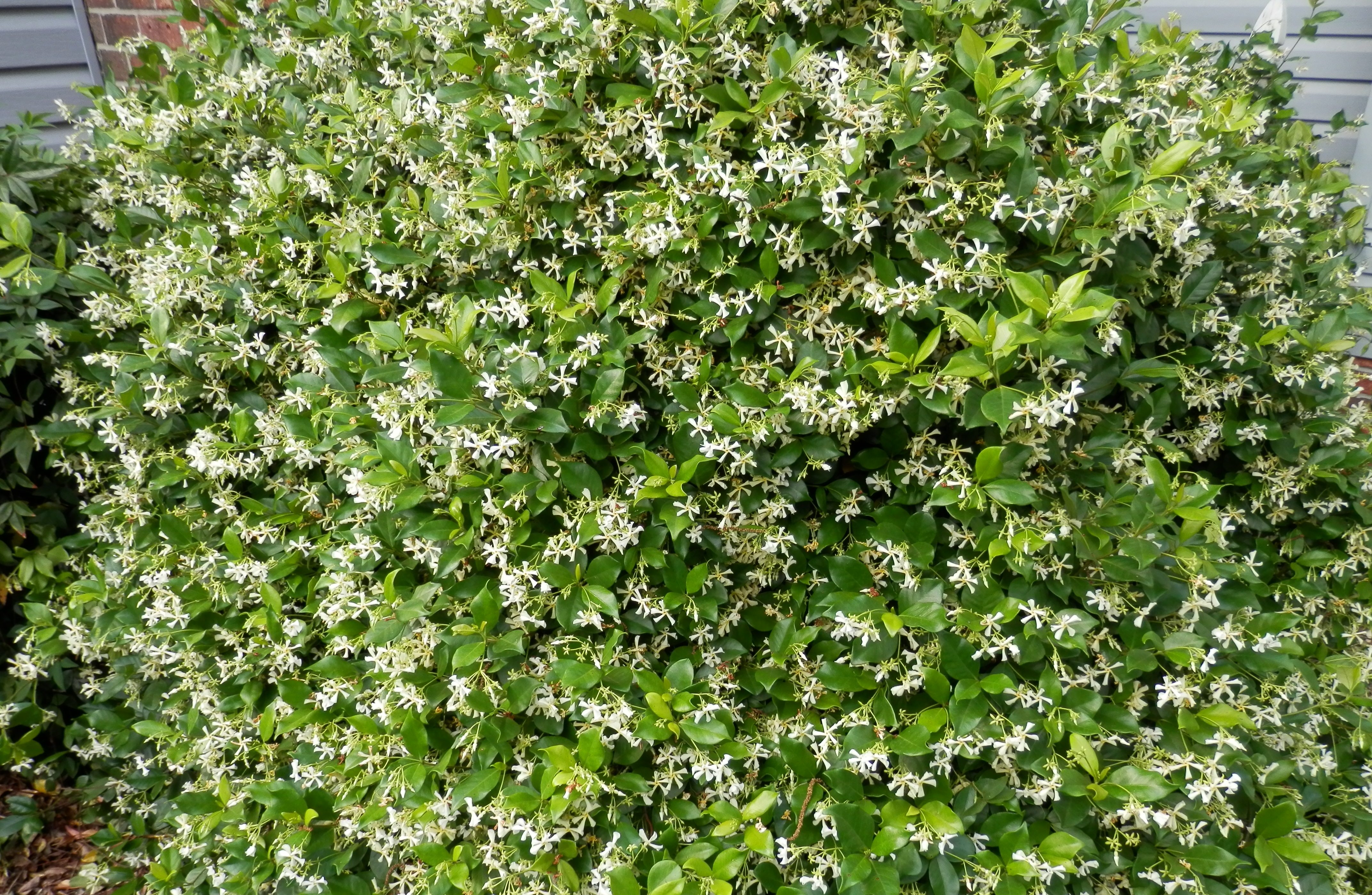
I Wish You Could Smell This – Sweet Savor!

Jasmine in Bloom

Jasmine in Bloom

A “sweet savor” isn’t a common twenty-first century phrase used to describe good smells – but it would appropriately describe the wonderful treat that greets Sharon and me when we go outside these days. The confederate jasmine is in full bloom and super full fragrance. It doesn’t matter which door we exit – the pleasing aroma from the one vine comes over the top of the house or around the corners to reach us.

The phrase is common in the Bible, though, especially in Leviticus. That’s where we get details of the sacrifices required under the Law. The burnt offerings were made “for a sweet savor unto the Lord”. Since God is a spirit (John 4:24), there must be something spiritual about the use of the phrase, rather than an actual physical smell.

We get some insight in Hosea 6:6, when God says: “For I desire mercy and not sacrifice, and the knowledge of God more than burnt offerings“. And, again when Jesus refers to that verse in Matthew 9:13: “But, go and learn what this means: I desire mercy and not sacrifice. For I did not come to call the righteous, but sinners to repentance“.

So, like many things in the Bible, it comes back to the attitude and “heart not just head” perspective (ex: See Sermon on the Mount, and 1 Corinthians 13). God desires we show mercy to others, and know and obey Him rather than just perform the rituals. Jesus didn’t come to call to repentance those who think they’re righteous, but those who know they are sinners.

Our sacrifices to God are not burnt offerings anymore, but our praise, prayer, thanksgiving, obedience and worship are what we offer. And, from reading the verses above, those are what God was looking for all along. However, the burnt offerings were also important back then, or God would not have instituted them. One purpose was to show those making the offerings that they weren’t long lasting – as soon as they finished one, they began preparing for the next. (Perhaps the “sweet savor” was a reminder of that constant need, and God’s “heart” requirements to the people who smelled it).

But, the main purpose was to picture Jesus Christ and the sacrifice He would make (and now has made) for His children. All the many purposes of the different offerings were fulfilled in Jesus. And, there is no more need for any physical sacrifice – He has fulfilled that once and for all.

So, perhaps, we can let the aromas of the jasmines, the roses, the comfort food on the stove, and (add your favorite here)be a sweet savor to remind us to sacrifice our love (from the heart not just the head) to Christ, and remember always what He has done to save us.

he (Jesus) entered once for all into the holy places, not by means of the blood of goats and calves but by means of his own blood, thus securing an eternal redemption (for us).” Hebrews 9:12 ESV

What Ingredients Create Our Spiritual Mulch?

Flower Bed Before Mulch

Flower Bed Before Mulch

The flower beds were a mess. Some still are since it’s a work in progress. I didn’t add any mulch in the fall, so the weeds were free to multiply and the warm winter helped them along.

But, thankfully, I’ve had some time and been able to work on the beds. Here’s what they’re starting to look like.

Flower Bed with Pine Straw Mulch

Flower Bed with Pine Straw Mulch

My favorite mulch (and the favorite of many folks around here in south Georgia) is pine straw. It’s abundant and relatively inexpensive. I like the way it looks, too – makes things nice and neat.

But, although it does look good, the main purposes of the mulch aren’t aesthetic. Mulch is used to stop the weeds from growing – hopefully to keep the ground dark enough that the weed seeds don’t even sprout. And, it’s used to retain the moisture when the summer gets hot and dry.

In my pondering as I put out the pine straw, I wondered if there was such a thing as spiritual mulch. We certainly need something to keep the spiritual weeds from growing – those thoughts or actions that begin siphoning off our nourishment that God provides. Those things that begin to shade our heart and mind from God’s presence.

We also need ways to keep the living water around us during times of spiritual drought.

I decided that prayer and Bible study are two necessary components of spiritual mulch. Consistent prayer (with the right attitude) keeps us close to God. Bible study continually reminds us who God is, who we are in relation to Him, and what He has done for us.

Those ingredients will keep the spiritual weeds from growing (and having worked hard at getting rid of weeds in the flower bed, I can say it’s much easier to keep them from growing than to remove them later) and they will keep the living water flowing from Jesus.

Pray without ceasing” 1 Thessalonians 5:17 ESV

On the last day of the feast, the great day, Jesus stood up and cried out, “If anyone thirsts, let him come to me and drink.” John 7:37 ESV

God’s Love Becomes a Forest of Beauty

Wisteria Spreads Through the Trees

Wisteria Spreads Through the Trees

Here’s a shot just down the road where the wisteria vines have spread through the pine trees. Sharon and I have watched as it expanded over many years. You can see why the vine is considered invasive – it goes everywhere it’s allowed to go. Many of those places aren’t where you want it.

But, if you want to have an interesting vine/bush most of the year, and a spectacular blooming vine/bush in the Spring, you can diligently prune and shape it.

A couple of thoughts came to mind –

Some of our habits and activities, even if they’re good ones, can get out of hand. We need to keep them diligently pruned and shaped so that they don’t interfere with our following God.

This beauty began in one place at one particular time when the original vine was planted. That beginning has spread from tree to tree and, years later, is a forest of beauty. Our beauty comes from God – we can spread His beauty through love. And, at times, just one act of love, at a particular time, will spread into a forest of beauty in the years to come.

Then the righteous will answer him, saying, ‘Lord, when did we see you hungry and feed you, or thirsty and give you drink? And when did we see you a stranger and welcome you, or naked and clothe you? And when did we see you sick or in prison and visit you?’ And the King will answer them, ‘Truly, I say to you, as you did it to one of the least of these my brothers, you did it to me.'” Matt 25:37-40 ESV

God’s Faithfulness – Springtime is Here!

Dogwood, Cardinal and Springtime

Dogwood, Cardinal and Springtime

Some of our Winter days were more like Spring than the days since Spring began last week – it’s been wet and a bit cool (though,nowhere near as cold as some of you were). But, there are definitely signs of the change  in seasons – with trees and azaleas blooming everywhere. God’s faithfulness continues (Great is Thy Faithfulness!).

Sharon pointed this shot out to me – the dogwood blooms, bird feeder, fence and pump house.  “And wouldn’t it be great to get a cardinal in it!”.  So, when I went outside to take the shot,  the cardinal and the Lord blessed it.

It made me think of how the Lord blesses us even when we’re not expecting it. All the little (and big) surprises He gives us  if we just pay attention. What a wonderful God we have!

O praise the LORD, all ye nations: praise him, all ye people. For his merciful kindness is great toward us: and the truth of the LORD endureth for ever. Praise ye the LORD.” Psalms 117 KJV