Got Faith? Plant an Oak Tree – Part 2

Brannen Oaks by Old Savannah Road

Brannen Oaks by Old Savannah Road


When you look southeast down the dirt road in front of our house, you are looking down the Old Savannah Road (see photo). It’s not called that these days, and most folks don’t know that for a time in the early 1800’s it was the Savannah Road. I happened to come across the information while researching the history of this area of our county in Georgia (Bulloch).


Brannen Oaks Closeup

Brannen Oaks Closeup


The photo captions reference the Brannen Oaks, so I’ll head in that direction. William Brannen came to America from Ireland before the Revolutionary War, and after marrying a wife, Elizabeth, in North Carolina, he worked his way to southeastern Georgia, and eventually ended up in northern Bulloch County.

John, one of their six sons, was born in 1798. He and his wife, also named Elizabeth, moved to the southern end of the county (where we live) where they raised their family.

The information said John and Elizabeth had a home in the “Iric” area. In the photos above, If you were on Google Earth and could turn right and look down about a half mile, you could see the woods where Iric Creek runs.

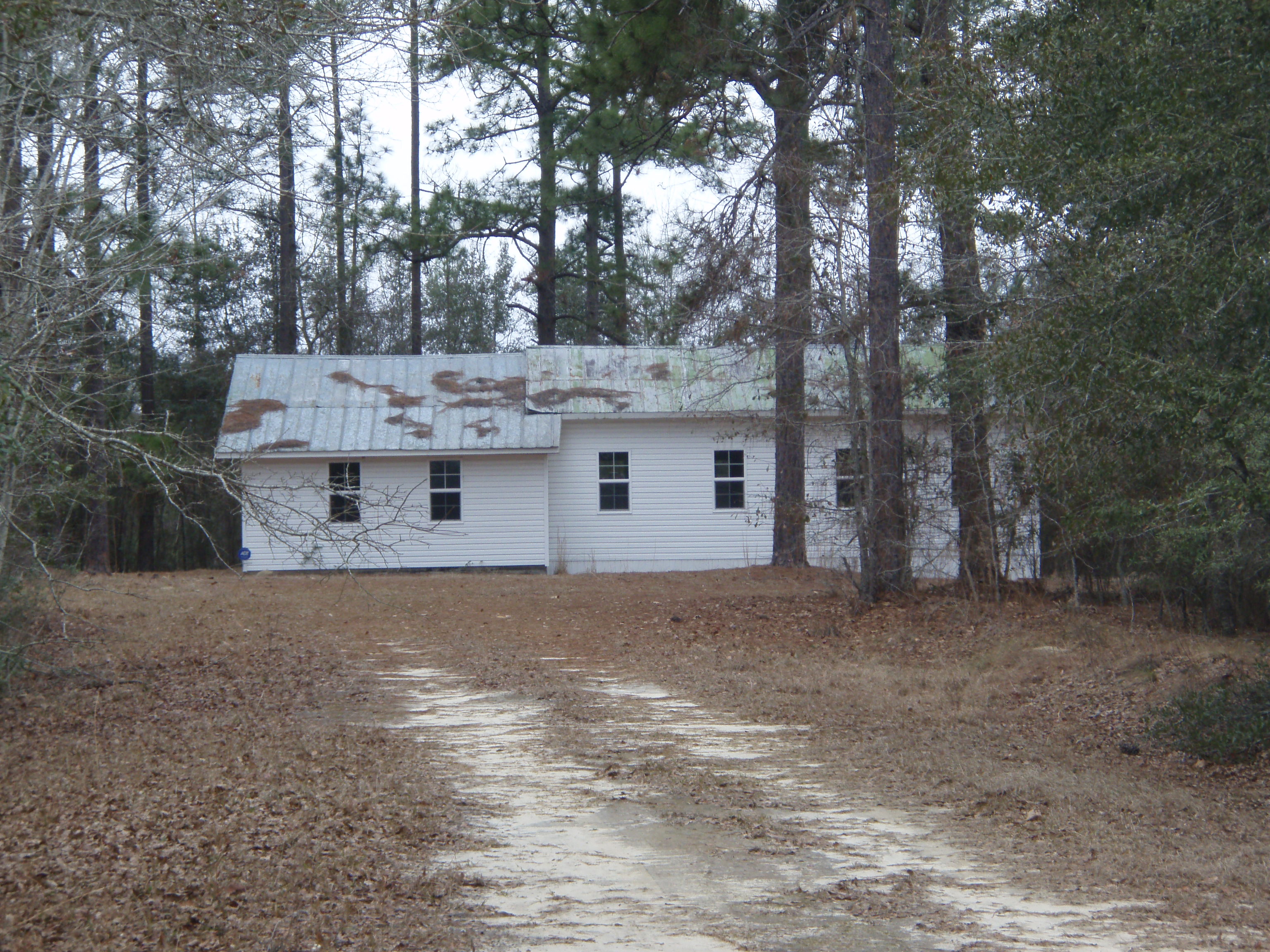
The narrative stated “At the beginning of the nineteenth century, along the Savannah Road in Bulloch County, between thirty and forty miles west of Savannah, were the spacious plantation homes of John Brannen and five of his sons.” One of those homes can be seen on the right in the top photo.

It was the home of John and Elizabeth’s son, William A. Brannen. In the description particular note was given to the twelve huge water oaks that stood on either side of the “Savannah Road” in front of his home. The photo shows the oaks that remain. The house was restored in the 1940’s (and several more times with an addition or two since then) and is now the home of our nearest neighbors. Mr. Brannen is buried in a brick-walled family cemetery about a quarter mile behind the house (down toward Iric Creek.)

A neat verification of part of this came about several years ago when there was a reenactment of the Pony Express-like mail run that in the early days came out of Savannah heading towards Milledgeville (I think it was Milledgeville). Two neat parts were that they did a rider/horse exchange on the road in front of our house, and we found they had verified this was the right road because of the huge oak trees that were mentioned in the early records.

This post seems to have become a history lesson, but the Lord is in all of those, too. Elizabeth (John’s wife and William A’s mother) was a Donaldson before she married. Her father, Robert Donaldson, and brother, Matthew, were preachers who organized a dozen or so churches in this part of Georgia in the early 1800’s. The church we attend, Lanes Church, was organized in 1831 and the early records mention that Matthew Donaldson was the preacher there at one time.

The Lord keeps working through time. I’m thankful to Him that I’m blessed to live on a small part of what was William A. Brannen’s plantation, and especially thankful that Mr. Brannen’s uncle is part of Lanes Church’s 183 year history. A history the Lord has made me a part of now.

For the Lord will not forsake his people;  he will not abandon his heritage; (Psalms 94:14 ESV)


Got Faith? Plant an Oak Tree

Old Oak Tree

Old Oak Tree

I went hunting for an impressive oak tree to photograph and found this one along a stretch of highway south of Daisy, Georgia. It is impressive. My purpose for the quest was to illustrate one aspect of faith: “for we walk by faith, not by sight.” 2nd Corinthians 5:7 ESV.

I don’t think this oak came about from a squirrel dropped acorn. I think someone planted this tree a century or more in the past. I have no proof of that, so that’s just a deduction from the other oaks up and down the road that appear to have been placed in particular locations. There probably was a house here then, but it probably wasn’t this one. (Could have been remodeled through the years, though).

The tree wouldn’t have become impressive during the lifetime of its planter. It’s likely it didn’t even reach “noticeable” status. And, it’s an absolute that the planter is not still around to see it become this mighty tree. But, that didn’t matter – they walked by faith. They knew what would happen far in the future. Their small efforts would become established and grow into a massive tree that would provide food and shelter for animals, and shade and comfort to people. I don’t know if they had the thought that just the sight of the tree would give a sense of wonder at God’s Creation, but I know that’s what I felt as I came around the curve and saw it.

It is just a deduction that someone planted this tree many years ago but the concept stands. Anytime you plant a long-lived, slow growing tree, you probably won’t see it reach “impressive” size. But, somebody will.

When the Apostle Paul wrote about walking by faith, not sight, he was noting that we don’t see the Lord, but we know (by the faith that God gave us and the Holy Spirit within us) we will see Him face to face one day. Paul then states that because of that, our aim in everything is “to please Him”

And that’s where I think another aspect of “walk by faith” comes in. It’s not planting trees (although I consider that a good thing), it’s doing things to please the Lord, even though we may not see the results (perhaps not even in our lifetime). As Jesus told us: Give someone who is thirsty a drink of water in His name. Feed the hungry. Welcome the strangers. Visit the sick. Make disciples.

Got faith? Then walk in it. Plant an oak tree. Or, better yet, spread the Good News about Jesus Christ, our Lord and Savior.

Not Abandoned. Never Forsaken.

Abandoned Quarry Shack

Abandoned Quarry Shack

I saw this at a working quarry outside of Augusta, GA. It’s interesting to me, because the shack once wasn’t a shack but a working shop. The abandoned power lines, with the transformers long gone, reveal it was electrified and probably had working equipment inside, and quite likely was a center of power for a section of the quarry (or perhaps all of the quarry at that time).

What’s most amazing, though, is that it once was on level ground. As the work of the quarry continued, the ground around it was taken away, truckload by truckload. Eventually, it was left standing alone. If you look closely, you can see the orange ladder laid on the ground to the left and below the building that someone can “climb” if they want to get to the shack, but I doubt there’s much reason to make it there. The power center of the quarry has moved to another section and the shack on the hill sits isolated.

The sight brought to mind Psalms 11:3 – “If the foundations are destroyed, what can the righteous do?” ESV

We can sometimes feel our foundations are being destroyed, or can think the ground around us is being dug away truckload by truckload. But, we should not despair, but consider other parts of that Psalm. “In the Lord I take refuge.” The Lord is in His holy temple. The Lord’s throne is in heaven.”  “For the Lord is righteous;
he loves righteous deeds; the upright shall behold his face.”

We can be sure we won’t be left standing alone like this shack. For, Jesus has promised “I will never leave you nor forsake you.”

The Old Paths of God

Inman Creek Primitive Baptist Baptist Church

Inman Creek Primitive Baptist Church

I worked on an engineering project at the Georgia State Prison near Reidsville, GA, last week, and took a few minutes at lunch to find Inman Creek Church. The church, two rut road, and the surrounding piney woods look much like they did fifty years ago. The only difference I saw was the vinyl siding that had covered the faded pine boards that were there back then.

In the 1960’s (when I was a relatively young lad), my father, mother and I would travel the distance to attend the annual Inman Creek Homecoming. We made the trip because my grandfather on my Father’s side, Elder Mallie Jones, Sr.,  preached at Inman Creek for many years. His time there was before I was born, and all the trips I remember were after he passed away, yet, we kept the tradition alive to honor him.

I remember the strange feeling as we passed the prison on the way to the church. The prison was a large group of buildings (many of them large, too)  surrounded by a tall barbed wire fence out in the middle of nowhere. The prison operated, and still operates, a huge farm, raising crops, cattle, hogs and operating a dairy. So, it was quite a serene, pastoral sight when you could no longer see the prison. I couldn’t really comprehend what it meant to be in prison, but thought it didn’t look like a good thing.

Homecoming was around Easter because I remember Easter Egg hunts. One particular time involved the yellow of a boiled egg. In fact, it happened on one of those road ruts you see in the photo. Being a young boy, I didn’t like the yellow of boiled eggs. I had enjoyed the white part of one and didn’t want to eat the little yellow ball inside, so I pretended to accidentally drop it on the ground (oops!). I kicked it over to the side of the road and looked up to see a little girl watching me. I shrugged my shoulders at her, and she ran over and told her mother that boy threw an egg on the ground and was kicking it around. Thankfully, her mother didn’t think it was a great crime, so the girl’s mother turned and ignored me.

However, my favorite memory is of Brother Dewey Anderson. In my mind, I can still see his broad smile and hear his infectious laugh as he greeted people. You knew he truly was happy to see you and wasn’t just making a show. He led the singing and the joy of the Lord was evident in his continued smile and exuberance with each note. He was an expert in seeing a need and finding out how he could help. (I found out on this trip that they have named the road in front of the church “Dewey Anderson Road””. Quite fitting, I think.)

I titled this post “The Old Paths of God”. The ruts of the drive into the church are some of those old paths, where people began driving mules and wagons to Inman Creek Church in the 1800’s. But, Brother Dewey is the true example of following God’s Old Paths, with his love for God and his love for people, he put that love into action.

Thus saith the Lord, Stand ye in the ways, and see, and ask for the old paths, where is the good way, and walk therein, and ye shall find rest for your souls.” Jeremiah 6:16 King James Version.

PS: A bit of personal history – I referred above to this preaching grandfather as being on my Father’s side, because my grandfather on my Mother’s side also was a preacher – Elder V Y Spivey, Sr. Perhaps more on him someday too.